
Lee County Weekly Arrest Log
Lee County offers no official seven-day, 72-hour, or other multi-day arrest log. The Sheriff's Recent Arrests and Inmate Search pages both display a message telling visitors to check back later for updates. Neither screen lists rows, dates, pagination, booking photos, a result count, or an archive. A blank page means nothing was posted, not that no arrests happened in Lee County.
A wider window serves a different purpose than a same-day check. A multi-day arrest log should let you work backward through bookings, catch late postings, and recover records that rolled off a current-custody list. No such official function exists here. The dependable route is to trace the arresting agency, the jail booking record, and the court case one at a time.
Read Lee County Arrest Records
When the county page is blank, the order of your sources matters. Start with official records. Keep dates separate, because an arrest date and a later publication date are not the same thing.
- Check the Sheriff endpoints and note the exact date and time viewed.
- Identify whether LCSO, Auburn Police, Opelika Police, a state agency, or another authority made the arrest.
- Review the proper municipal release channel for a selected public event.
- Search Lee County court records for a docket and later disposition.
- Request the arrest report and booking record separately from their custodians.
- Use unofficial archives only as leads, then verify each detail.
For fresh booking and custody checks, the Daily Arrest Report is the right tool. A weekly search asks a different question: how several dated records relate to one another. Note the event time, the jail intake time, the source publication time, and any page update time as four distinct facts.
Lee County Arrest Log Fields
Lee County publishes no official log schema, so treat any field list as a set of questions to ask the agency rather than a description of what appears online.
| Entry element | What it should establish |
|---|---|
| Name and identifier | Correct person and booking, not a same-name match |
| Agency | Who made the arrest and may hold the report |
| Arrest and booking dates | Separate event time from jail intake |
| Charge | Accusation entered at that point, subject to change |
| Bond or hold | Pretrial terms or another authority’s custody interest |
| Release | Status, date, reason, and source update time |
| Image | Whether it is a booking photo, media image, or other picture |
Turn to the court docket for the outcome. A charge can be amended or dropped, and a bond amount or release date only records what happened at the jail.
Lee County Weekend Arrest Timing
No official weekend or holiday posting schedule exists. A news story can run days after an arrest, an Opelika Police release can carry a later update date, and a court case may be indexed well after booking. Never let any of those timestamps quietly stand in for the arrest time. A current inmate view also drops a person after release, while an old story stays online forever.
Some agencies publish selected items. Auburn Public Safety posts chosen arrest stories, and Auburn Open Line follows a periodic newsletter rhythm. Opelika Police News Flash offers selected investigation and arrest releases. None of these claims to be a complete Lee County blotter. The Sheriff's social accounts likewise highlight public-safety items rather than every intake at LCDC.
Note: Preserve the original post date and later update date whenever both appear.
Lee County Arrest Log Archives
Lee County states no roster archive depth or booking-photo retention period. The Alabama Department of Archives and History explains that local agencies follow Records Disposition Authorities approved by the Local Government Records Commission. Those schedules set minimum retention periods and rules for lawful destruction. A page vanishing from the web does not mean the underlying record was destroyed.
Ask the record custodian which series covers the booking sheet, arrest report, release transaction, or photograph; what date range survives; whether an older system was replaced; and whether a destruction notice exists. Litigation, audits, administrative needs, or historical value can extend retention. Court archives run through a separate channel, the Administrative Office of Courts and the Lee Circuit Clerk.
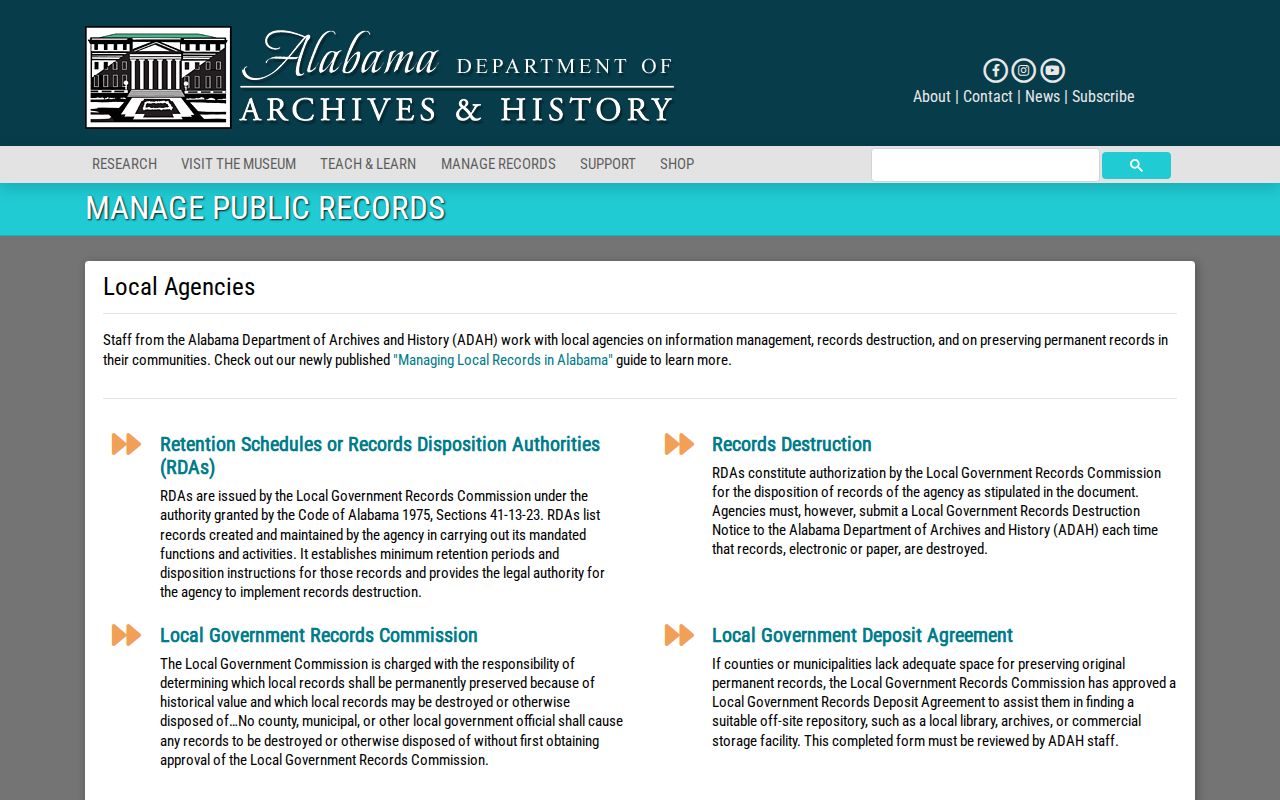
The archive guidance explains government retention authority rather than showing arrests. Only the record custodian can answer whether a specific Lee County booking still exists.
Lee County News Arrest Blotters
Local news can supply a lead when official pages are hard to search. Opelika Daily News keeps a police-reports category. WTVM, The Auburn Plainsman, CNAW2, WSFA, and WRBL each cover selected Lee County arrests and investigations. Publication is event-driven, so timing varies. A story may rest on an agency release, get updated later, or run a scene image instead of a booking photograph.
Pull the reported agency, date, booking destination, and charge from the story, then use them to find the primary record. A news publication date often falls after jail intake, and a story cannot prove anyone is still in custody. Auburn Open Line and Opelika Police releases are official city communications, yet both remain selective. Neither replaces LCDC records for the county booking.
Lee County Unofficial Arrest Archives
Busted Newspaper, Arrests.org, Mugshots.zone, and RecentlyBooked offer different depths of Lee County pages. All are unofficial. They can lag behind releases, keep stale images, omit people, or label dates in their own ways. Busted Newspaper reaches the oldest pages; Arrests.org pairs an empty current landing view with dated pages; Mugshots.zone carries old monthly material; RecentlyBooked describes a last-30-days view. None of them reveals the government's retention period. The Mugshots.zone Lee County archive shows why a visible month list should be read as a third-party collection rather than a county record.
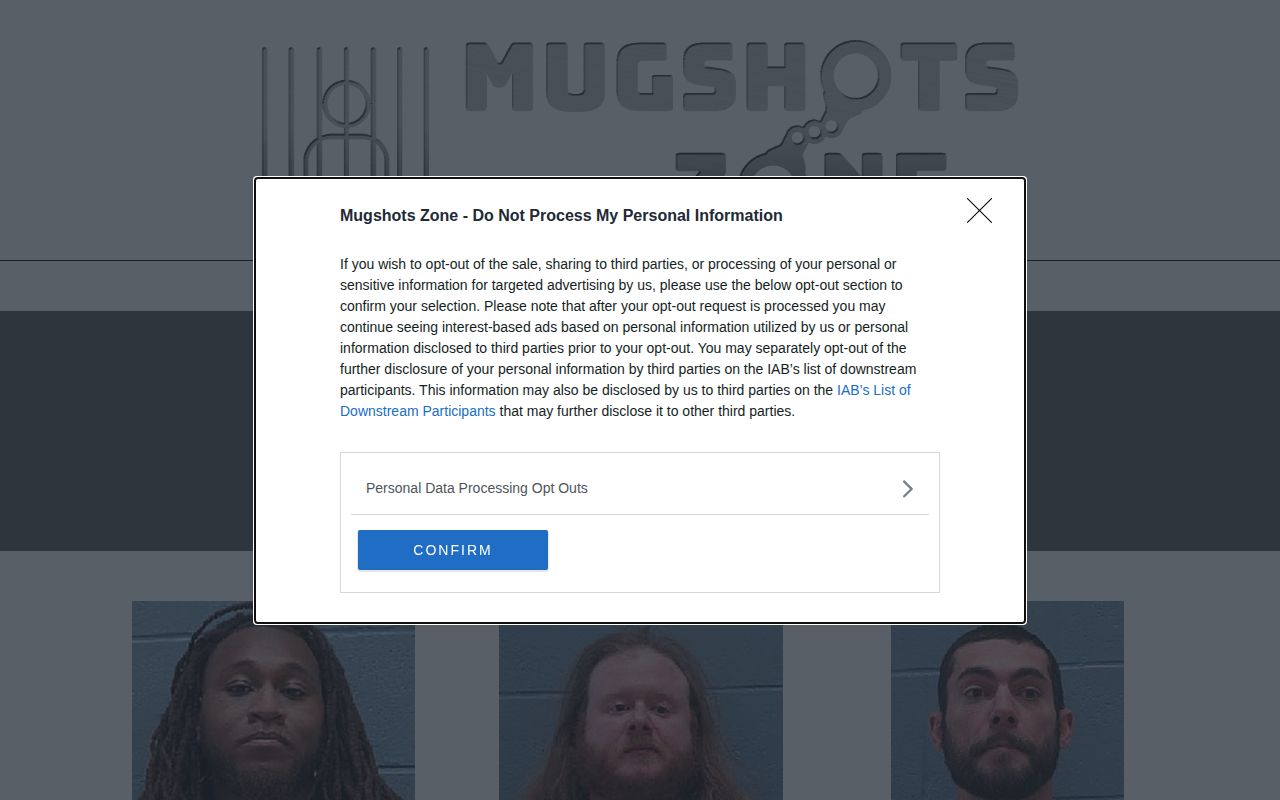
Write down the URL, the displayed date, the last update, and any disclaimer. Then confirm the arrest and outcome with the original agency and the court.
Lee County Custody Layers
One jail serves all of Lee County. The W.S. “Buck” Jones Detention Center took over detention duties in 2007, the same year Opelika's city lockup shut down. So a single arrest in Opelika can leave a paper trail split between offices. The city keeps its police report. The county keeps the booking record.
LCDC also holds prisoners for the U.S. Marshals Service across parts of Alabama and Georgia. A federal hold is not a new Lee County charge, and it is not a state sentence either. County custody, state prison time, and federal custody sit in three separate systems, each with its own way to search. The Lee County recent-arrests hub sorts those channels out.
Being the county seat gives Opelika no special claim on records. OPD controls its own city files. The circuit clerk keeps the court papers, and LCDC keeps jail intake. Any solid weekly arrest search has to treat those layers as separate.
Lee County Arrest Innocence
A name in an arrest log is only the start. Verify identity before drawing conclusions, since two people can share a name. Read the actual charge listed in the booking record. Then follow the Lee County case through the court system to see how it ends.
Public Record Search
Sponsored Results